RadioheadFollow Me Around
Directed by Us
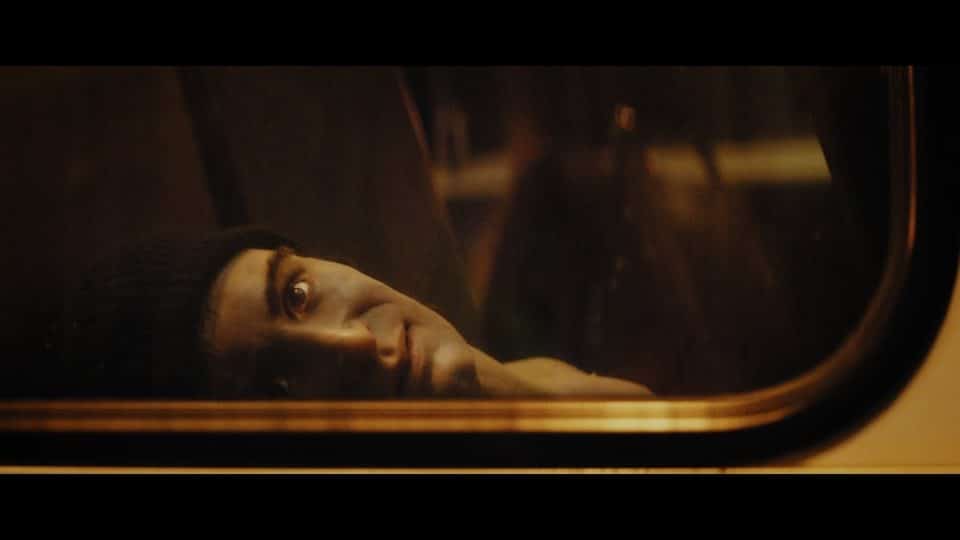
“Follow Me Around” by Radiohead is a haunting and introspective track originally recorded during the “OK Computer” era, officially released with “KID A MNESIA”. The…


Artist Channel
Alternative rock band from Abingdon-on-Thames, Abingdon, England (formed 1985). Radiohead make music in the alternative rock, britpop and experimental rock genres.
The 4 Most-Watched Radiohead Videos
20 Radiohead Music Videos from 1993–2021
Directed by Us
“Follow Me Around” by Radiohead is a haunting and introspective track originally recorded during the “OK Computer” era, officially released with “KID A MNESIA”. The…
Directed by Live Set
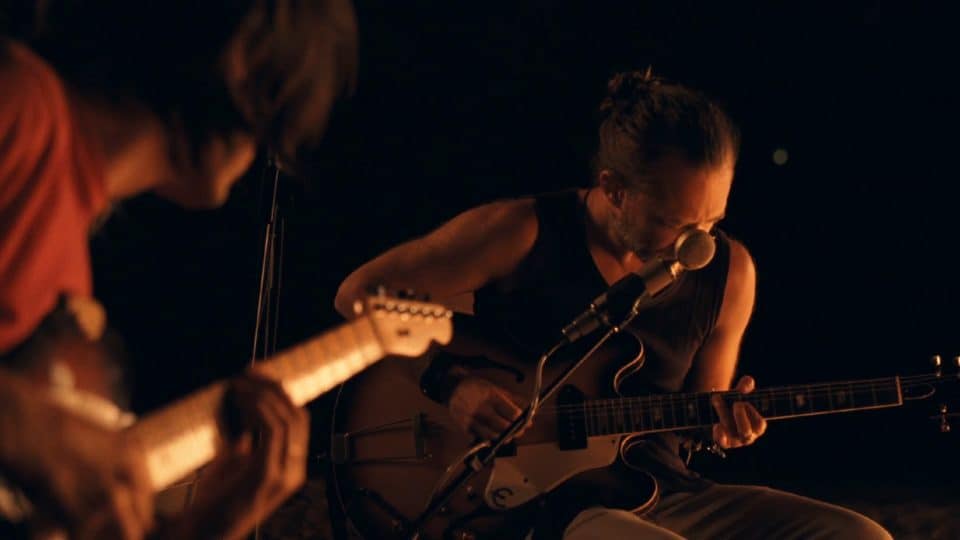
This “From The Basement” session features Radiohead performing “In Rainbows” live in studio. The intimate setting, crisp cinematography, and flawless execution highlight the album’s emotional…
Directed by Colin Read
Radiohead's music video for 'Man Of War', directed by Colin Read.
Directed by Michał Marczak
Radiohead's music video for 'I Promise', directed by Michał Marczak.
Directed by Paul Thomas Anderson
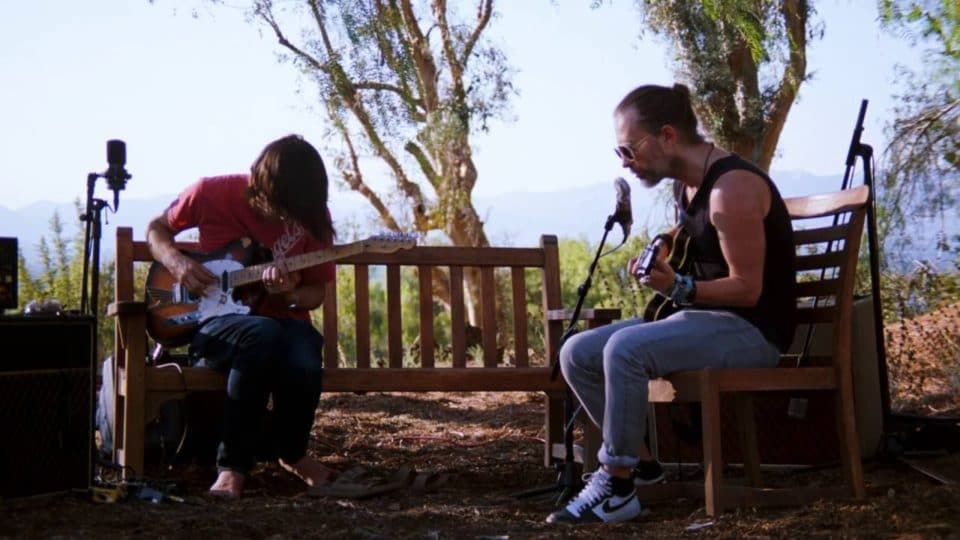
Radiohead music video for 'Present Tense: Jonny, Thom & a CR78' directed by Paul Thomas Anderson.
Directed by Paul Thomas Anderson
Radiohead's music video for 'The Numbers: Jonny, Thom & a CR78' directed by Paul Thomas Anderson.


Formed 1985 · Abingdon-on-Thames, Abingdon, England · alternative rock, Britpop · Parlophone
Radiohead are an English rock band formed in Abingdon, Oxfordshire, in 1985. The band members are Thom Yorke (vocals, guitar, keyboards); the brothers Jonny Greenwood (guitar, keyboards, other instruments) and Colin Greenwood (bass); Ed O'Brien (guitar, backing vocals); and Philip Selway (drums). They have worked with the producer Nigel Godrich and the cover artist Stanley Donwood since 1994. Radiohead's experimental approach is credited with advancing the sound of alternative rock. Radiohead signed to EMI in 1991 and released their debut album, Pablo Honey, in 1993. Their debut single,… via Wikipedia
Band Members: Thom Yorke, Jonny Greenwood, Colin Greenwood, Ed O'Brien, Philip Selway
Awards: Grammy Award for Best Alternative Music Album for “OK Computer”; Rock and Roll Hall of Fame; Libera Award for Best Live Act; Libera Award for Video of the Year
Radiohead’s studio albums / EPs · 10
Artists who shaped Radiohead’s sound
8 articles about Radiohead from our favourite music publications
Guitarist Ed O’Brien has told NME he thinks it's because 2016's 'A Moon Shaped Pool' "was so fucking awful to make" The post Radiohead have “not even talked about another record” appeared first on…
Plus, a Goose live LP and Maggie Rose's Relix Sessions. Vinyl from Radiohead, Pearl Jam, Nine Inch Nails On Sale Now at the Consequence Store Consequence Staff
The guitarist opens up about how meditation, nature and “walking through the fire” of his depression shaped his new solo album ‘Blue Morpho’, finding new confidence in Radiohead, and why “society…
Weezer have an arena tour coming up this fall and a new album in the works, and in a move that doesn’t seem strictly related to either, Rivers Cuomo has uploaded a bunch of old covers to his YouTube…
"I remember when I first heard ‘Nevermind’ and I was like, ‘OK, it’s on’" The post Thom Yorke on the impact of Nirvana, the Radiohead tour and his “fucking different” new solo album appeared first on…
Styles revealed he lost his virginity to "Talk Show Host" while inducting Thom Yorke into the Ivors Academy. Harry Styles Credits Radiohead for Inspiring His Songwriting and First Sexual Act Eddie Fu
Radiohead are one of the most influential, restless, and artistically fearless bands in modern music. Formed in Oxfordshire, England, the group consists of Thom Yorke, Jonny Greenwood, Colin Greenwood, Ed O’Brien, and Philip Selway — five musicians who began as school friends and went on to reshape the sound, ambition, and emotional language of alternative rock.
Across a career that has stretched from the early 1990s into the modern streaming era, Radiohead have become more than a band. They are a blueprint for creative evolution. They are proof that a group can survive fame, reject repetition, experiment wildly, and still remain one of the most beloved and critically respected acts in the world.
From the wounded alienation of “Creep” to the paranoid future-shock of OK Computer, from the electronic reinvention of Kid A to the intimate beauty of In Rainbows and the orchestral melancholy of A Moon Shaped Pool, Radiohead have built a body of work that feels both deeply human and strangely prophetic. Their music captures anxiety, technology, heartbreak, political unease, environmental dread, modern loneliness, and the fragile hope that sometimes flickers beneath it all.
Radiohead’s story began long before they became one of the defining bands of their generation. Thom Yorke, brothers Jonny and Colin Greenwood, Ed O’Brien, and Philip Selway met while attending school in Abingdon, Oxfordshire. They first performed under the name On A Friday, a reference to the day of the week when they would rehearse.
Like many great bands, Radiohead started with something simple: friends in a room, instruments in their hands, trying to find a sound that felt like their own. But from the beginning, there was something unusual about the chemistry between them. Thom Yorke’s voice carried a wounded intensity that could move from whisper to siren. Jonny Greenwood approached the guitar less like a traditional rock player and more like a composer pulling electricity apart. Colin Greenwood and Philip Selway gave the band its pulse and architecture, while Ed O’Brien added atmosphere, texture, and emotional lift.
After signing to EMI in the early 1990s, the band changed their name to Radiohead, inspired by the Talking Heads song “Radio Head.” Their debut single, “Creep,” was released in 1992 and became the song that first brought them international attention.
For many listeners, “Creep” was the first encounter with Radiohead. Released before their debut album Pablo Honey, the song became an anthem for outsiders, overthinkers, romantics, misfits, and anyone who had ever felt out of place in their own skin.
Its quiet-loud dynamic, bruised lyrics, and explosive guitar stabs made it one of the most recognizable alternative rock songs of the 1990s. But “Creep” also became a complicated gift. It gave Radiohead global visibility, but it threatened to define them too narrowly. For a band this ambitious, becoming known for one song was both a launchpad and a cage.
Pablo Honey, released in 1993, introduced Radiohead to the world, but it was only the opening chapter. The band’s true identity would emerge in the years that followed, as they pushed away from the shadow of “Creep” and began building something deeper, stranger, and more enduring.
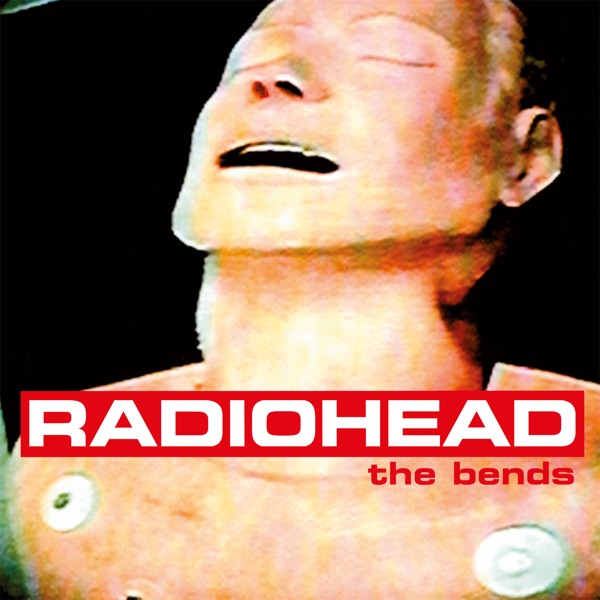
Radiohead’s second album, The Bends, released in 1995, was the moment the band proved they were not a fleeting alternative rock success story. This was Radiohead becoming Radiohead.
Songs like “Fake Plastic Trees,” “High and Dry,” “Just,” “Street Spirit (Fade Out),” and “My Iron Lung” showed a band growing in confidence, emotional depth, and sonic ambition. The guitars were still central, but the music became more atmospheric, more cinematic, and more psychologically intense.
The Bends captured the emotional pressure of the 1990s with unusual precision. It was melodic but uneasy, beautiful but bruised. The album dealt with exhaustion, artificiality, ambition, disconnection, and the feeling of trying to remain human inside a world that increasingly felt synthetic.
For many fans, The Bends remains one of Radiohead’s most emotionally direct albums. It is the bridge between their early guitar-driven sound and the more experimental work that would soon make them legendary.
In 1997, Radiohead released OK Computer, an album that transformed them from a respected British alternative rock band into one of the most important groups in the world.
OK Computer was not just a collection of songs. It felt like a transmission from the edge of the future. Released at the dawn of the internet age, the album captured a world becoming faster, colder, more automated, and more alienating. Its themes of technology, surveillance, consumerism, transportation, isolation, and spiritual exhaustion made it feel prophetic.
Songs like “Paranoid Android,” “Karma Police,” “No Surprises,” “Lucky,” “Exit Music (For a Film),” and “Let Down” became landmarks in alternative music. The album balanced massive emotional force with strange structures, haunting production, and a sense of dread that felt both personal and global.
Where many bands of the era were chasing anthems, Radiohead were building architecture. OK Computer sounded like airports, office towers, bad dreams, fluorescent lights, motorway crashes, and late-night panic attacks. It was rock music stretched into cinema, literature, and prophecy.
The album won major critical acclaim, earned Grammy recognition, and is regularly cited as one of the greatest albums of all time. More importantly, it gave Radiohead creative permission to go anywhere next.
After the success of OK Computer, Radiohead could have made a bigger, more polished version of the same album. Instead, they detonated their own formula.
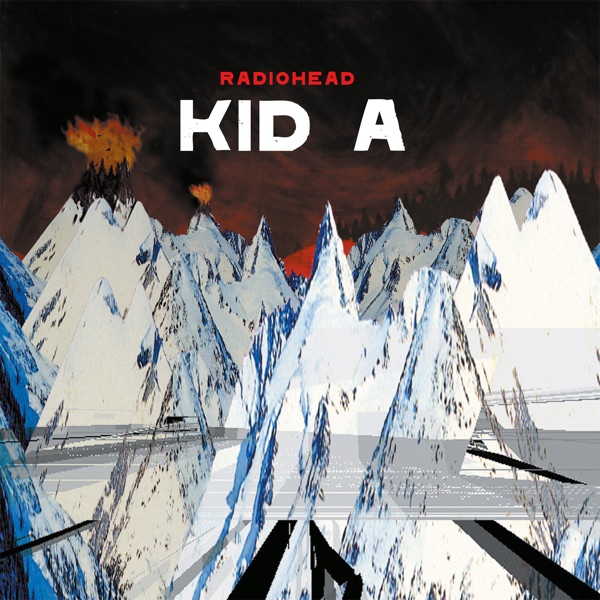
Released in 2000, Kid A was one of the boldest reinventions in modern music. Guitars were no longer the obvious center. Traditional rock structures were broken apart. In their place came electronic textures, abstract lyrics, jazz influence, ambient passages, processed vocals, and rhythms that felt fragmented and unstable.
For some fans, Kid A was shocking at first. For others, it was a revelation. Over time, it became clear that Radiohead had not abandoned emotion — they had found new ways to express it.
Songs like “Everything in Its Right Place,” “Idioteque,” “How to Disappear Completely,” “The National Anthem,” and “Motion Picture Soundtrack” expanded the vocabulary of alternative music. Kid A showed that a rock band did not have to stay inside rock music. It could absorb electronic music, classical composition, experimental sound design, and still carry the emotional weight of a human voice trying to survive the noise.
The album topped charts, won major awards, and became one of the defining records of the 21st century. Radiohead had done something rare: they had followed a masterpiece with a mutation.
Released in 2001, Amnesiac came from the same creative period as Kid A, but it has its own distinct identity. If Kid A feels like waking up inside a machine, Amnesiac feels like walking through the ruins after the machine has already done its damage.
The album is stranger, jazzier, murkier, and in places more haunted. Songs like “Pyramid Song,” “Knives Out,” “You and Whose Army?,” and “Life in a Glasshouse” revealed another side of Radiohead’s experimental period — one filled with ghostly piano, brass arrangements, uneasy rhythms, and lyrics that seemed to drift between memory and nightmare.
Amnesiac proved that Radiohead’s reinvention was not a single dramatic gesture. It was a new operating system.
In 2003, Radiohead released Hail to the Thief, an album shaped by political anxiety, media saturation, and the atmosphere of the early 2000s. The title itself suggested unease, anger, and suspicion.
Musically, the album combined elements of the band’s guitar-driven past with the electronic experimentation of Kid A and Amnesiac. Tracks like “There There,” “2 + 2 = 5,” “Go to Sleep,” and “A Wolf at the Door” carried a tense, unsettled energy.
Hail to the Thief is one of Radiohead’s most sprawling records. It feels like a nervous system overloaded by news, propaganda, screens, fear, and power. It is messy in the way the modern world is messy — overconnected, overstimulated, and constantly on edge.
For fans who love Radiohead at their most urgent and politically charged, Hail to the Thief remains a vital chapter.
In 2007, Radiohead released In Rainbows in a way that changed the conversation around music distribution. The band made the album available as a download where listeners could choose what they wanted to pay.
The release strategy became a landmark moment in the digital music era. But beyond the business innovation, In Rainbows was simply a stunning album.
Warm, intimate, rhythmic, and emotionally open, In Rainbows contains some of Radiohead’s most beloved songs, including “Nude,” “Weird Fishes/Arpeggi,” “Reckoner,” “Jigsaw Falling into Place,” “Bodysnatchers,” and “House of Cards.”
After the cold futurism of Kid A and the political tension of Hail to the Thief, In Rainbows felt physical. It had breath, skin, pulse, desire, and vulnerability. The album proved that Radiohead could still surprise the world not only through experimentation, but through beauty.
For many listeners, In Rainbows is the band at their most complete — experimental without being distant, emotional without being obvious, complex without losing the body.
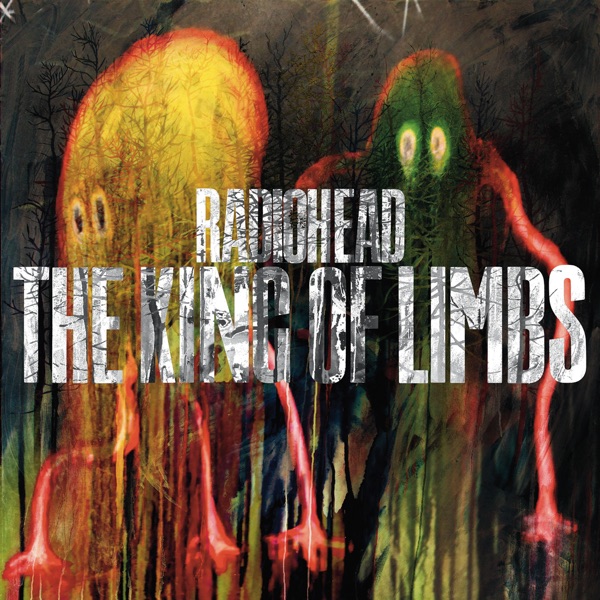
Released in 2011, The King of Limbs was another left turn. Shorter, more rhythm-focused, and built around loops and layered grooves, the album explored repetition, movement, and texture.
Songs like “Bloom,” “Lotus Flower,” “Codex,” and “Separator” revealed a band interested in organic patterns and digital processes. The album’s title refers to an ancient tree, and much of the music feels rooted in natural cycles: branches, pulses, shadows, rainfall, insects, and machinery blending into one another.
While The King of Limbs was more understated than some of Radiohead’s landmark albums, it deepened the band’s reputation for refusing the obvious path. Even after decades of success, they were still willing to make music that asked listeners to meet it on its own terms.
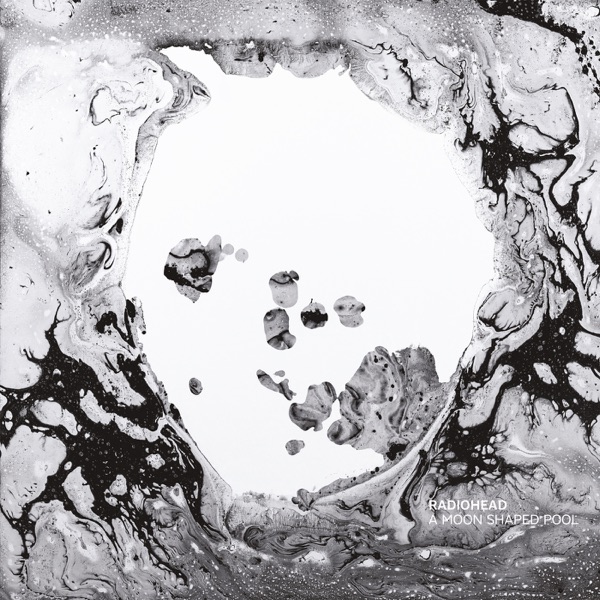
Radiohead’s ninth studio album, A Moon Shaped Pool, arrived in 2016. It is one of the band’s most beautiful and emotionally devastating records.
The album features lush orchestral arrangements, delicate piano, acoustic textures, and some of Thom Yorke’s most fragile vocal performances. Songs like “Daydreaming,” “Burn the Witch,” “Decks Dark,” “Present Tense,” “The Numbers,” and “True Love Waits” move through grief, climate anxiety, memory, longing, and resignation.
Jonny Greenwood’s orchestral work plays a major role in the album’s identity, giving it a cinematic and classical depth. The record feels less like a reinvention and more like a reckoning — a band looking back across its own emotional landscape and finding ghosts everywhere.
The closing track, “True Love Waits,” had existed in Radiohead’s live history for years before finally appearing in studio form. Its placement at the end of A Moon Shaped Pool feels like a quiet collapse, one of the most heartbreaking endings in the band’s catalogue.
Radiohead’s best moments are not limited to hit singles. Their greatness lives in the way certain songs changed what listeners expected from rock, alternative music, and popular songwriting.
These songs are not just highlights. They are coordinates in a map of artistic evolution.
Radiohead are often described as alternative rock, but that label is too small for what they became. Their music moves through art rock, electronic music, experimental rock, ambient music, post-rock, jazz, classical arrangement, and cinematic sound design.
What makes Radiohead special is not just that they experimented. Many bands experiment. Radiohead made experimentation feel emotionally necessary.
Their strange time signatures, fractured structures, processed vocals, abstract lyrics, and unconventional arrangements are never just decoration. They are ways of describing modern life: the glitch, the panic, the beauty, the loneliness, the surveillance, the dread, the longing to disappear, and the need to feel something real.
Thom Yorke’s voice is central to that world. It can sound angelic, bitter, terrified, tender, or detached. Jonny Greenwood’s musical imagination gives the band much of its tension and cinematic force. Ed O’Brien’s guitar textures and backing vocals add atmosphere and lift. Colin Greenwood’s bass work brings melodic intelligence and grounding. Philip Selway’s drumming gives the band precision, restraint, and quiet power.
Together, Radiohead create music that feels engineered and haunted at the same time.
Radiohead’s visual world has always been central to their mythology. Their music videos helped define their identity as a band that understood image, atmosphere, and unease as deeply as sound.
The video for “Just” became a classic of 1990s alternative music television, built around mystery, urban anxiety, and an unforgettable unanswered question. “Street Spirit (Fade Out),” directed by Jonathan Glazer, gave the band one of their most iconic visual statements — black-and-white, slow-motion, surreal, and quietly apocalyptic.
“Karma Police” turned a simple road sequence into a nightmare of pursuit and reversal. “No Surprises” trapped Thom Yorke inside a slowly filling helmet of water, creating one of the most memorable images in the band’s visual history. “Pyramid Song,” “There There,” “Lotus Flower,” “Daydreaming,” and “Burn the Witch” each expanded Radiohead’s visual language in different directions, from animation and ritual to dance, dream logic, and political allegory.
For a band so associated with sound, Radiohead have also been one of the great visual bands of the modern era. Their videos rarely feel like promotional afterthoughts. They feel like portals into the same disturbed, beautiful universe as the songs.
Radiohead matter because they changed the rules without losing the audience.
They proved that a band could become globally successful and still resist the machinery of expectation. They proved that reinvention did not have to mean abandoning emotional connection. They proved that rock music could absorb electronic music, classical composition, visual art, political dread, and digital-age anxiety without becoming academic or cold.
Their influence can be heard across indie rock, electronic music, experimental pop, film scoring, art rock, and modern alternative music. Countless artists have learned from Radiohead’s courage: the courage to follow a breakthrough with a risk, the courage to let songs be strange, the courage to make beauty uncomfortable, and the courage to keep moving.
Radiohead’s greatest achievement may be that they made uncertainty feel monumental. Their music does not offer easy answers. It does not always comfort. Sometimes it unsettles, sometimes it mourns, sometimes it disappears into static. But it always searches.
Radiohead’s legacy is not just built on great albums. It is built on a rare creative philosophy: never become your own tribute act.
From Pablo Honey to The Bends, from OK Computer to Kid A, from In Rainbows to A Moon Shaped Pool, Radiohead have treated every era as a chance to rebuild the machine from the inside. They have become one of the most respected bands in music history by refusing to stand still.
Their best work feels timeless because it was never chasing the moment. It was listening for what the moment was hiding: the fear beneath progress, the loneliness beneath connection, the beauty beneath collapse.
Radiohead are a band for people who feel the world too deeply. A band for late nights, headphones, long walks, bad news, impossible love, political dread, and the strange electricity of being alive in an age that often feels unreal.
They are one of the defining bands of alternative rock, one of the most important British bands of all time, and one of the rare groups whose catalogue feels less like a discography and more like a weather system.
Everything you need to know about Radiohead
Radiohead formed in 1985.
Radiohead are from Abingdon-on-Thames, Abingdon, England.
Radiohead’s music spans alternative rock, britpop and experimental rock.
Radiohead have released music through Parlophone, ATO Records, Capitol Records and XL Recordings.
Radiohead have released 10 studio albums, from Pablo Honey (1993) to A Moon Shaped Pool (2016).
Radiohead’s most recent studio album is A Moon Shaped Pool, released in 2016.
Radiohead’s most-watched music videos on AltSounds are “Radiohead- Creep”, “No Surprises”, “Karma Police” and “High And Dry”.
Radiohead’s most-viewed music video on AltSounds is “Radiohead- Creep” (1993), with 1.5 billion views, directed by Brett Turnbull. Radiohead's "Creep," their debut single from the album "Pablo Honey," is known for its raw emotion and introspective lyrics. The song, expressing feelings of alienation and self-doubt, gained widespread popularity.
Radiohead cite influences including Pink Floyd.
Radiohead have received Grammy Award for Best Alternative Music Album for “OK Computer”, Rock and Roll Hall of Fame, Libera Award for Best Live Act and Libera Award for Video of the Year.
Radiohead’s members include Thom Yorke, Jonny Greenwood, Colin Greenwood, Ed O'Brien and Philip Selway.
You can listen to Radiohead on Spotify, Apple Music, YouTube, SoundCloud and Bandcamp, and watch their music videos right here on AltSounds.